Emerging Paradigms · Study deck
DTN Epidemic Routing
A protocol means an agreed set of rules for passing data.
Blueprint Bina is your guide for this deck.

After studying this chapter
Learning objectives
You will be able to:
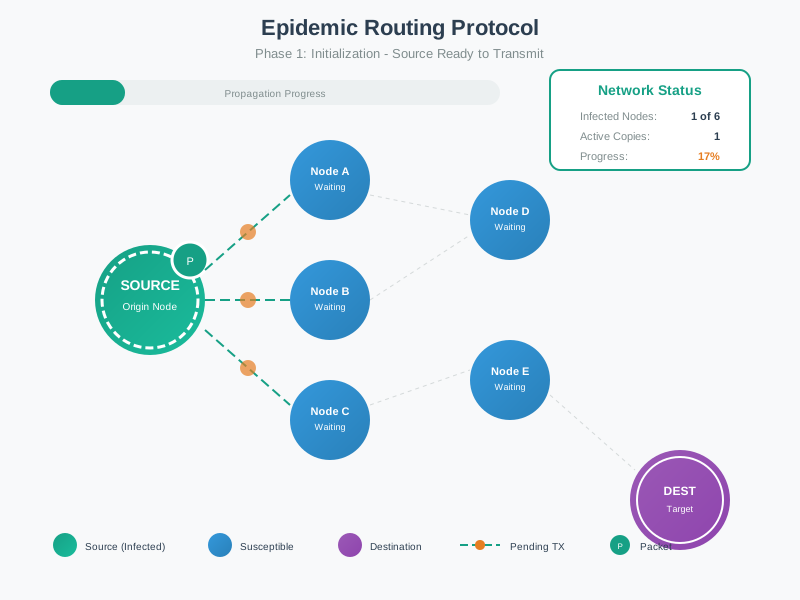
- Explain: In Figure: Each useful contact is a chance to copy, t0 — Source S creates and stores message M42 starts the TTL and copy limits while S owns: M42 — copy 1.
- Explain: Epidemic routing improves the chance of eventual delivery by giving a payload more potential carriers, but every new carrier consumes storage and may spend airtime and energy later.
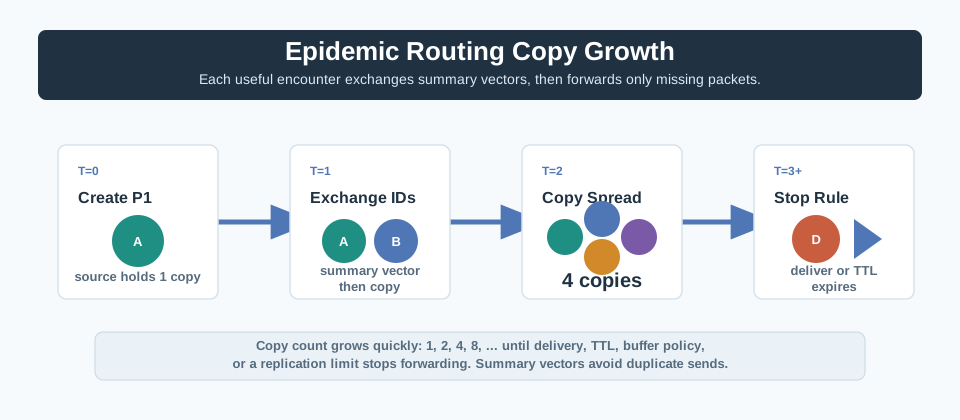
- Explain: At: T=1 — Exchange IDs, A and B first compare a summary vector and only then copy; that ordering prevents a transmission when the peer already has P1.
- Explain epidemic routing as bounded store-carry-forward replication
Major section
Begin With One Copy
Also check what happens when the note is old or the store is full.
- A protocol means an agreed set of rules for passing data.
- One phone holds a safety note.
- When the teams meet, the note can be copied.
- Later, either team may meet the base camp.
Major section
Flooding as DTN Trade-off
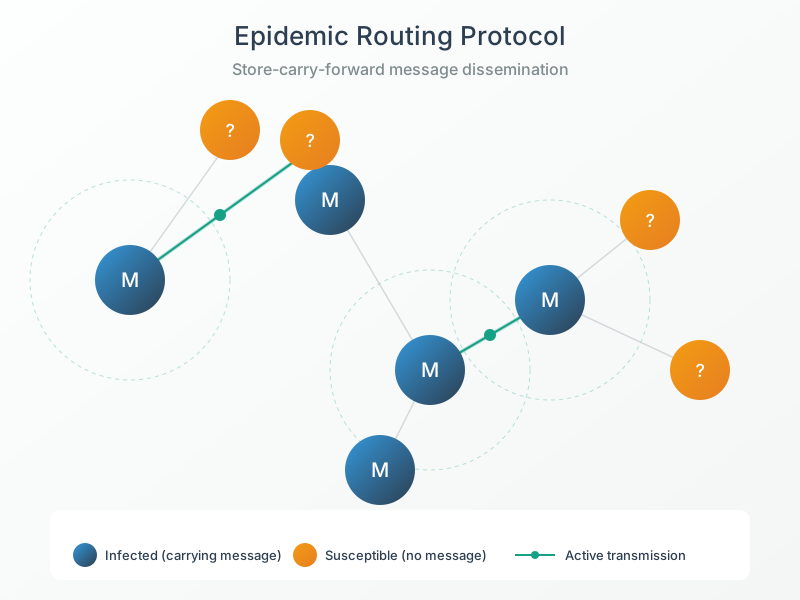
Epidemic routing improves the chance of eventual delivery by giving a payload more potential carriers, but every new carrier consumes storage and may spend airtime and energy later.
- At: T=1 — Exchange IDs, A and B first compare a summary vector and only then copy; that ordering prevents a transmission when the peer already has P1.
Major section
Flooding as DTN Trade-off (continued)
By: T=2 — Copy Spread, the drawing shows 4 copies, making the exponential sequence 1, 2, 4, 8,. Concrete.
- The protocol does not contain an automatic notion of “enough,” so: T=3+ — Stop Rule must supply one: delivery,: TTL expiry, buffer policy, or a replication limit.
- That progression connects store-carry-forward reliability to the chapter's resource argument.
- A routing design is incomplete if it celebrates extra delivery paths without also specifying which rule halts copying and which queued payload loses capacity while P1 remains live.
Major section
Flooding as DTN Trade-off (continued)
The short timeline establishes that copies can grow quickly; the next question is what must happen at each encounter before that growth is justified.
- In Figure: Each useful contact is a chance to copy, t0 — Source S creates and stores message M42 starts the TTL and copy limits while S owns: M42 — copy 1.
- The later t4 encounter shows why that inventory check matters: B and C both list M42, so no payload crosses the link.
- The event trace explains how individual copies are admitted, but a deployment decision also needs a network-wide view of the resulting state.
Major section
Stop Epidemic Copies After Delivery
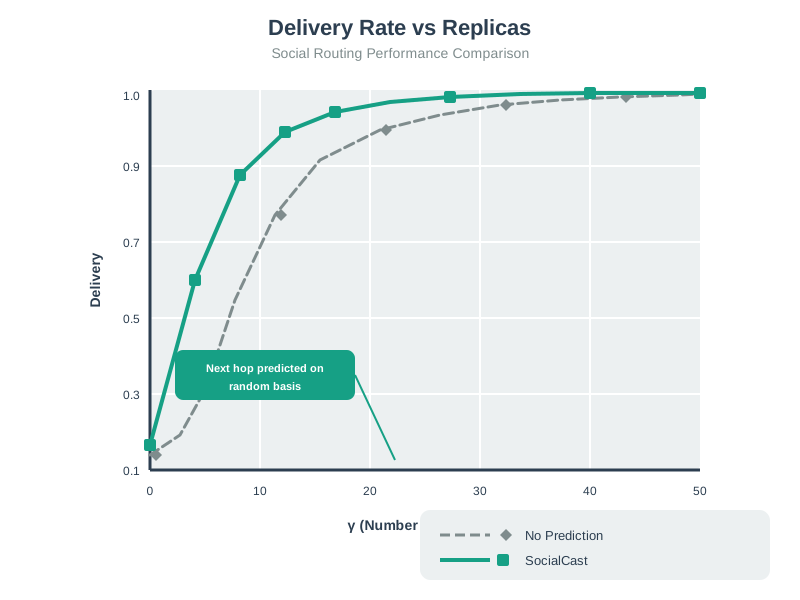
The replica charts show the benefit and cost together: more carriers improve contact chances but consume storage, airtime, and energy.
- Starting from one carrier, ideal pairwise spreading can grow as 1, 2, 4, and 8 copies across contact rounds.
- The summary exchange should suppress that duplicate DTN transfer.
Deck summary
Key takeaways
Also check what happens when the note is old or the store is full.
- Epidemic routing improves the chance of eventual delivery by giving a payload more potential carriers, but every new carrier consumes storage and may spend airtime and energy later.
- By: T=2 — Copy Spread, the drawing shows 4 copies, making the exponential sequence 1, 2, 4, 8,. Concrete.
- The short timeline establishes that copies can grow quickly; the next question is what must happen at each encounter before that growth is justified.
- The replica charts show the benefit and cost together: more carriers improve contact chances but consume storage, airtime, and energy.
Retrieval practice
Recall check 1 of 3

Blueprint Bina says: answer from memory, then check your reasoning.
Q1When is epidemic routing a defensible DTN choice?
Show answer
Answer: A Epidemic routing is a deliberate trade: it improves delivery opportunity in intermittent networks by spending bounded copies, buffer, contact time, and energy.
Retrieval practice
Recall check 2 of 3

Blueprint Bina says: answer from memory, then check your reasoning.
Q2Two DTN nodes meet for a short contact. What should happen before payload transfer in epidemic routing?
Show answer
Answer: A Epidemic contacts use summary vectors to avoid duplicate copies, then exchange missing eligible payloads according to copy, priority, and contact-window limits.
Retrieval practice
Recall check 3 of 3

Blueprint Bina says: answer from memory, then check your reasoning.
Q3Which design finding should fail an epidemic routing review?
Show answer
Answer: C A fieldable epidemic design must bound storage, copies, contact use, expiration, and priority.
Print reference
Answers
Answer key.
- A · Epidemic routing is a deliberate trade: it improves delivery opportunity in intermittent networks by spending bounded copies, buffer, contact time, and energy.
- A · Epidemic contacts use summary vectors to avoid duplicate copies, then exchange missing eligible payloads according to copy, priority, and contact-window limits.
- C · A fieldable epidemic design must bound storage, copies, contact use, expiration, and priority.