Emerging Paradigms · Study deck
DSR Reactive Routing
Picture a quiet field sensor waking to send one urgent reading through nearby devices.
Blueprint Bina is your guide for this deck.

After studying this chapter
Learning objectives
You will be able to:
- Explain: It should show when the node discovers a route, what route is cached, how packet headers carry the route, how long cached information is trusted, and what evidence shows recovery after a broken link.
- Explain: Ad-hoc On-Demand Distance Vector, or AODV, uses the same RREQ/RREP vocabulary but stores the result differently, and that difference is worth reviewing alongside DSR rather than in isolation.
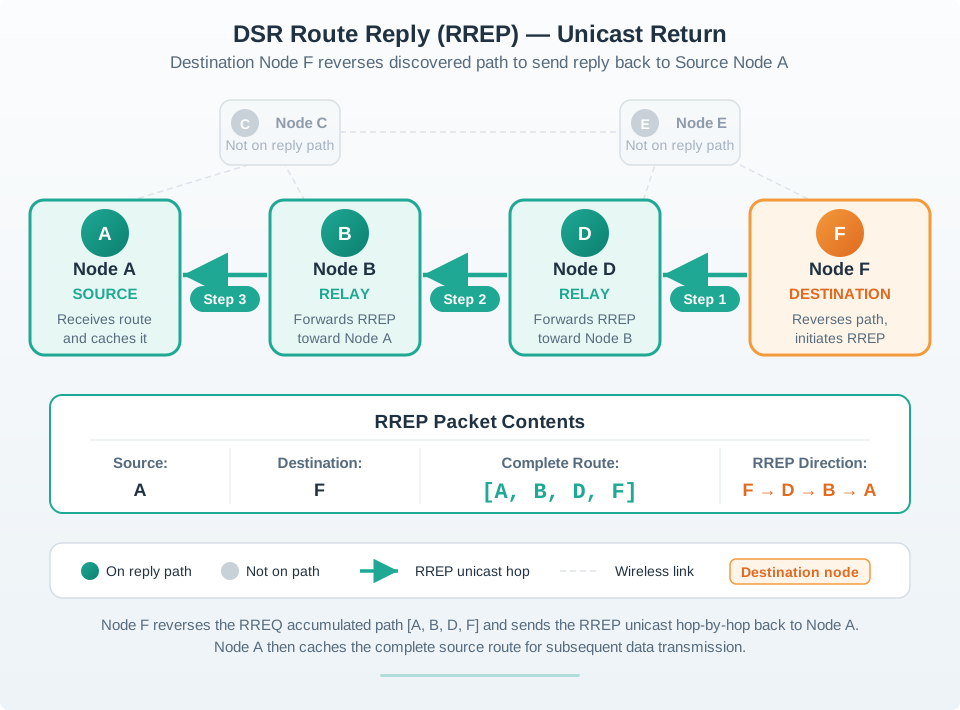
- Explain: RFC 4728 describes the route record as protocol state that can be copied from a Route Request into a Route Reply and then into later data packets.
Major section
DSR Finds Routes on Demand
Dynamic Source Routing, or DSR, is a reactive routing protocol for ad-hoc networks.
- A node does not maintain a next-hop table for every possible destination while the network is quiet.
- When it has data to send and no usable cached route, it discovers a path on demand.
- The discovery exchange has two visible parts.
Major section
DSR Finds Routes on Demand (continued)
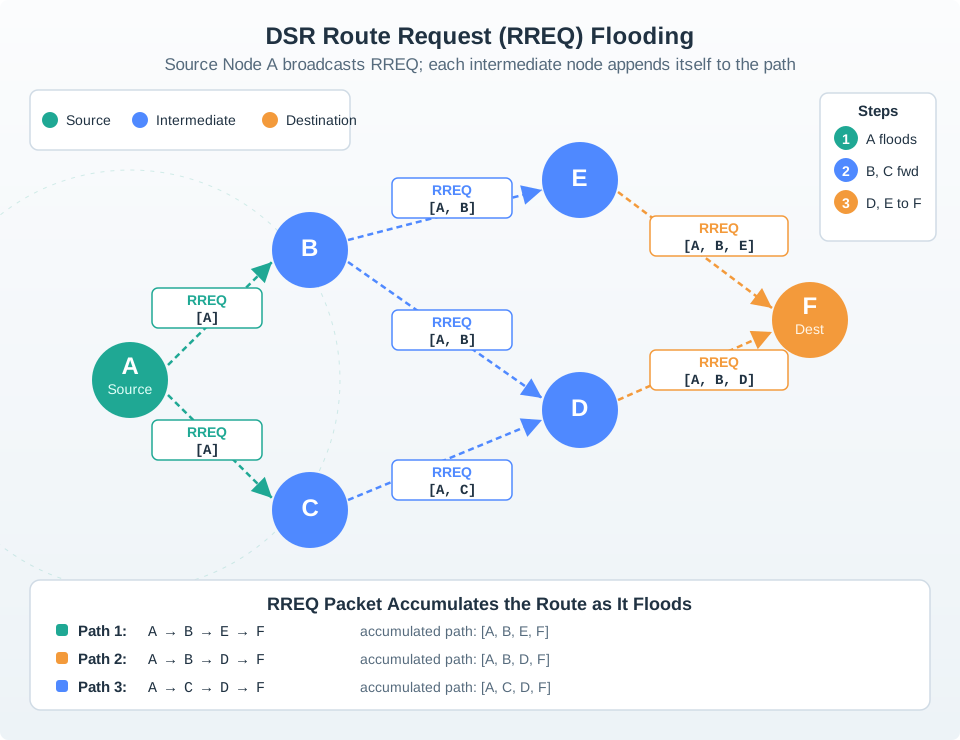
A Route Request, or RREQ, is broadcast outward and records the path it has followed.
- The important review distinction is between reachability and route evidence.
- In a small classroom mesh this may look like a simple broadcast and reply.
- In a field deployment the same exchange affects latency, airtime, and battery.
Major section
DSR Finds Routes on Demand (continued)
A first packet waits while RREQs propagate and duplicates are suppressed; later packets are fast only if the cached source route still matches the topology.
- Reactive fit: DSR avoids periodic route advertisements when there is no traffic, which can fit intermittently active devices better than always-maintained route tables.
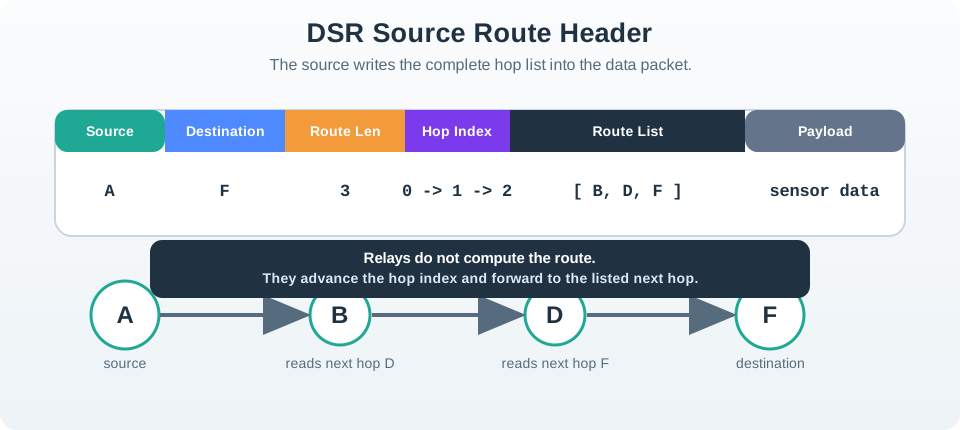
- Source route: the packet carries the ordered relay list.
- Each relay forwards to the next named hop instead of choosing a destination route from a table.
Major section
Route as Evidence
A practical DSR review should prove more than protocol vocabulary.
- It should show when the node discovers a route, what route is cached, how packet headers carry the route, how long cached information is trusted, and what evidence shows recovery after a broken link.
- A discovery review should also watch for a specific failure shape: the RREP storm.
Major section
Source Routes Move Packet State
DSR changes where routing state lives.
- Table-driven protocols keep forwarding state in each router.
- DSR can put much of the forwarding decision into the packet itself: source, destination, route length, current hop position, relay list, and payload.
- That design removes per-destination tables from relays, but it does not remove all cost.
Major section
Source Routes Move Packet State (continued)
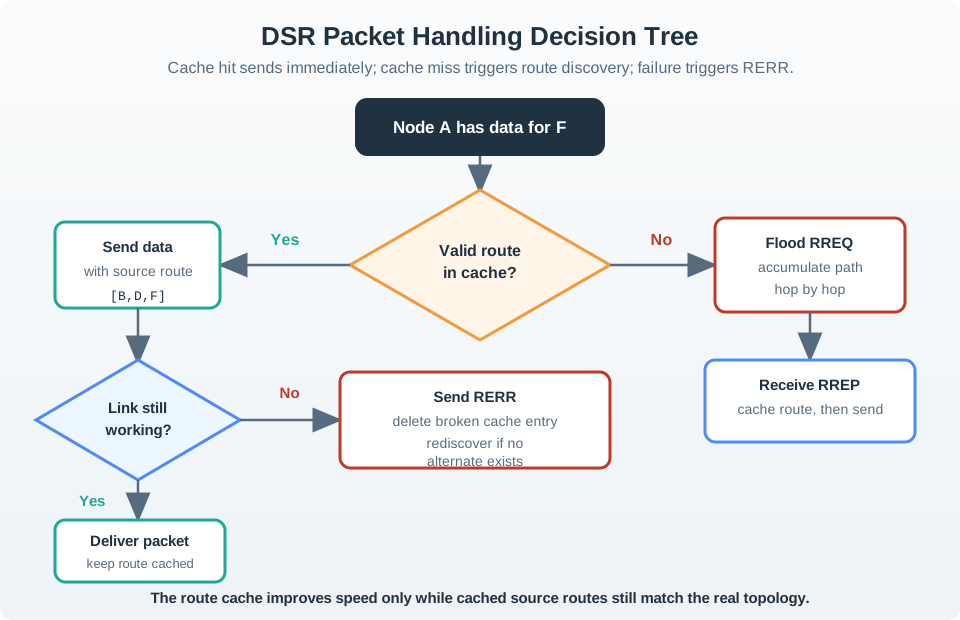
Route caches can become stale.
- Discovery floods can collide with application traffic on constrained wireless links.
- Link failures must generate Route Errors so the source and other caches stop trusting broken path segments.
- Without that evidence, a team cannot separate a healthy cache hit from a lucky delivery over an outdated path.
Major section
Source Routes Move Packet State (continued)
The under-the-hood test therefore needs both packet-header traces and negative evidence from deliberate link breaks.
- RFC 4728 describes the route record as protocol state that can be copied from a Route Request into a Route Reply and then into later data packets.
- Route maintenance is the other half of the mechanism.
- The route-discovery flood, source-route header, cache policy, and repair behavior must all fit the actual traffic pattern and wireless link.
Major section
How AODV Answers The Same Discovery Problem
DSR is not the only reactive protocol built on Route Request and Route Reply.
- Ad-hoc On-Demand Distance Vector, or AODV, uses the same RREQ/RREP vocabulary but stores the result differently, and that difference is worth reviewing alongside DSR rather than in isolation.
- Instead, each intermediate node that forwards the RREQ creates a temporary distance-vector-style table entry pointing back toward the source.
- That table is soft state, not a permanent route.
Deck summary
Key takeaways
Dynamic Source Routing, or DSR, is a reactive routing protocol for ad-hoc networks.
- A Route Request, or RREQ, is broadcast outward and records the path it has followed.
- A first packet waits while RREQs propagate and duplicates are suppressed; later packets are fast only if the cached source route still matches the topology.
- A practical DSR review should prove more than protocol vocabulary.
- DSR changes where routing state lives.
Retrieval practice
Recall check 1 of 3

Blueprint Bina says: answer from memory, then check your reasoning.
Q1Which statement best describes why a team might choose DSR for an ad-hoc IoT deployment?
Show answer
Answer: A DSR is reactive: it reduces idle route maintenance but pays discovery cost when a needed route is not already cached.
Retrieval practice
Recall check 2 of 3

Blueprint Bina says: answer from memory, then check your reasoning.
Q2A field team says DSR is working because one packet reached the gateway. What review evidence is still missing?
Show answer
Answer: A DSR should be reviewed as a chain of evidence: route discovery, source-route forwarding, cache reuse, and recovery after topology changes.
Retrieval practice
Recall check 3 of 3

Blueprint Bina says: answer from memory, then check your reasoning.
Q3Why can DSR perform poorly when routes are long or topology changes often?
Show answer
Answer: A DSR moves forwarding state into packets and caches routes at nodes.
Print reference
Answers
Answer key.
- A · DSR is reactive: it reduces idle route maintenance but pays discovery cost when a needed route is not already cached.
- A · DSR should be reviewed as a chain of evidence: route discovery, source-route forwarding, cache reuse, and recovery after topology changes.
- A · DSR moves forwarding state into packets and caches routes at nodes.