Emerging Paradigms · Study deck
DSR Worked Examples
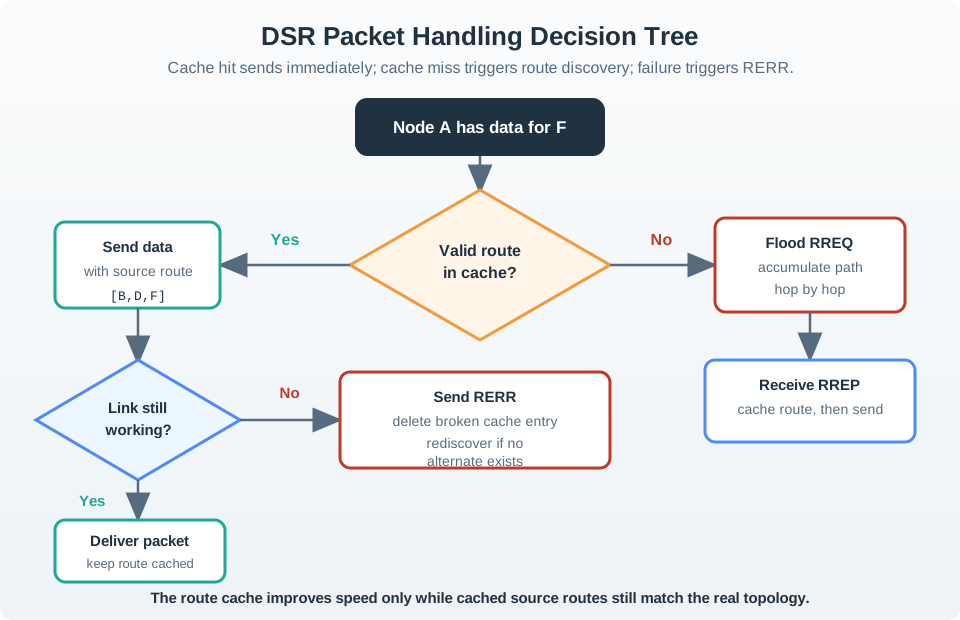
Picture a rescue tracker discovering a route, using it twice, then losing a relay as the team moves.
Blueprint Bina is your guide for this deck.
After studying this chapter
Learning objectives
You will be able to:
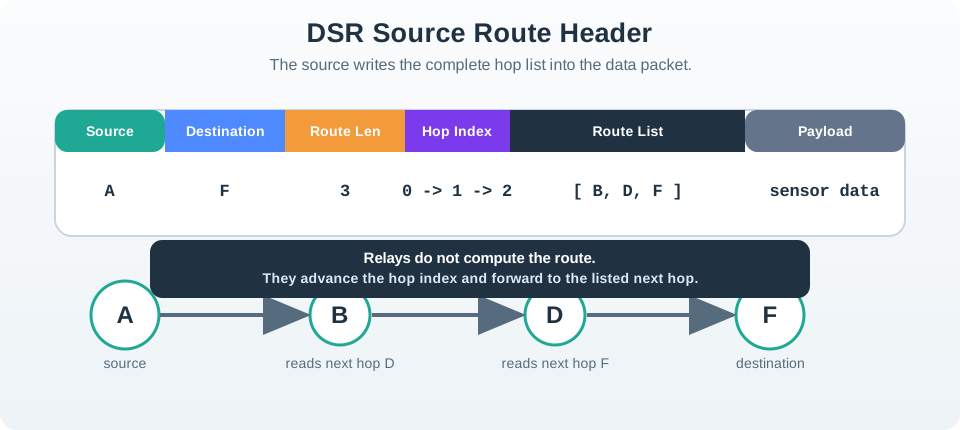
- Explain: If a packet carries an 8-hop route and each compact node ID takes 2 bytes, the route list alone is 16 bytes.
- Explain: This proves one worked lifecycle, not every mobility pattern; the deeper examples compare good reuse with stale knowledge and repair costs.
- Explain: That lifecycle lets you trace why DSR can be efficient for sparse traffic and why it can stumble in mobile networks.
- Explain: A worked trace should separate the first route that reaches the destination from the total work done by the network.
Major section
Start Simple
A protocol means the agreed rules and message order devices use to exchange routing information.
- This proves one worked lifecycle, not every mobility pattern; the deeper examples compare good reuse with stale knowledge and repair costs.
- Each packet carries part of that story.
- The example matters because it shows when cached knowledge saves airtime and when that same knowledge becomes a liability.
Major section
Overview: Read DSR as a Route Lifecycle
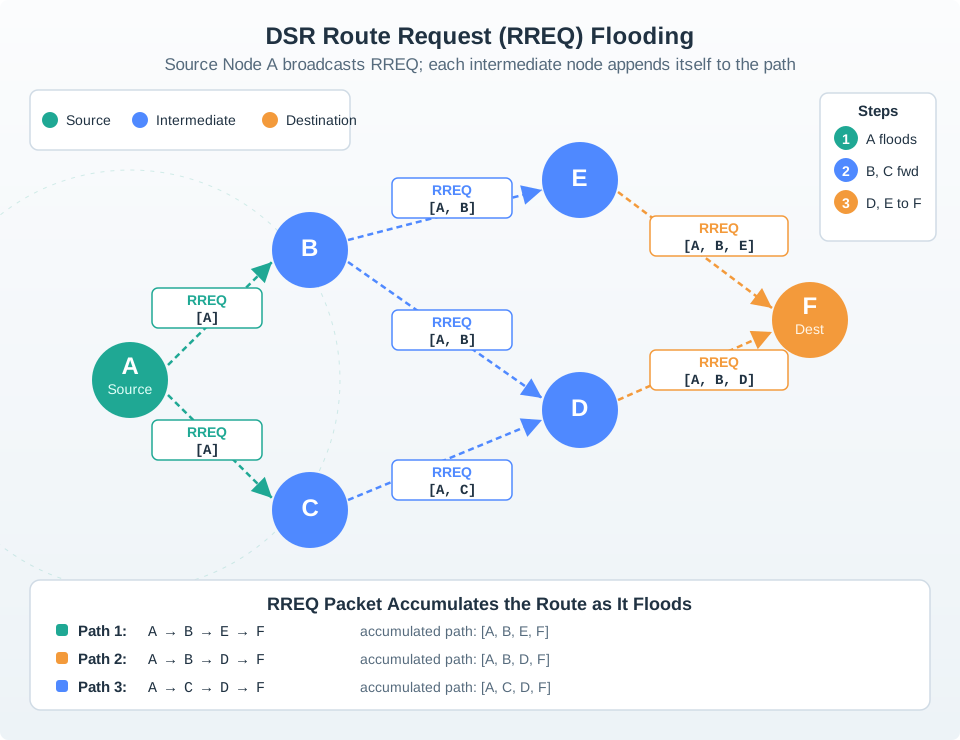
Dynamic Source Routing examples are useful only when they show the whole route lifecycle.
- A worked trace should separate the first route that reaches the destination from the total work done by the network.
- That lifecycle lets you trace why DSR can be efficient for sparse traffic and why it can stumble in mobile networks.
Major section
Tune Cache Age to Mobility
DSR cache settings should be chosen from deployment behavior, not from a generic default.
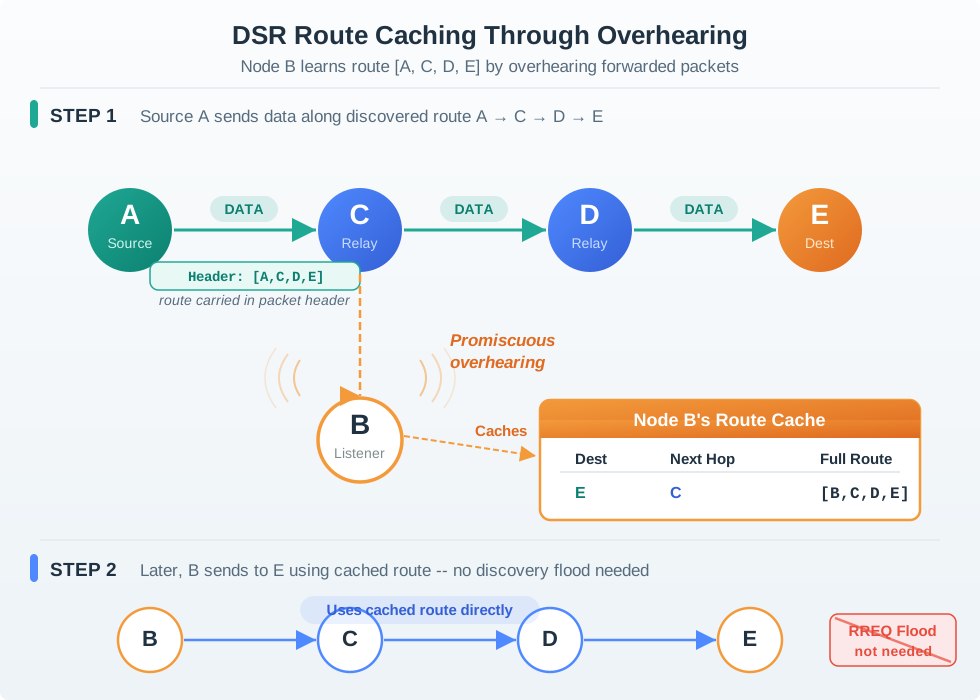
- A cached route is valuable when traffic reuses it before the topology changes.
- If movement changes useful paths about every 90 seconds, a 300-second cache timeout is too long.
Major section
DSR Header, State, and Repair
The mechanics behind DSR examples are small enough to audit, but each one has a scaling consequence.
- A stale cached route fails only after a relay tries to use it and cannot reach the next hop.
- If a packet carries an 8-hop route and each compact node ID takes 2 bytes, the route list alone is 16 bytes.
Major section
DSR Caching and Route Maintenance
A DSR cache is helpful until it becomes stale.
- Dynamic Source Routing can reuse paths it has discovered or overheard.
- Maintenance is the discipline of detecting broken links, removing bad assumptions, and deciding when discovery must run again.
Deck summary
Key takeaways
A protocol means the agreed rules and message order devices use to exchange routing information.
- Dynamic Source Routing examples are useful only when they show the whole route lifecycle.
- DSR cache settings should be chosen from deployment behavior, not from a generic default.
- The mechanics behind DSR examples are small enough to audit, but each one has a scaling consequence.
- A DSR cache is helpful until it becomes stale.
Retrieval practice
Recall check 1 of 6

Blueprint Bina says: answer from memory, then check your reasoning.
Q1A DSR Route Request reaches a destination over a 3-hop path in both a 50-node network and a 1000-node network. Which statement best describes the discovery timing?
Show answer
Answer: B DSR examples separate first-route latency from network-wide flood cost.
Retrieval practice
Recall check 2 of 6

Blueprint Bina says: answer from memory, then check your reasoning.
Q2A DSR deployment has assets that change useful neighbor relationships about every 90 seconds. The current 300-second cache timeout causes many route errors. Which adjustment is the best first change?
Show answer
Answer: B DSR cache timeouts are deployment parameters.
Retrieval practice
Recall check 3 of 6

Blueprint Bina says: answer from memory, then check your reasoning.
Q3A DSR source gets a route error after a relay link breaks. What should its recovery trace keep?
Show answer
Answer: A This trace ties the error and rediscovery to delay and cost.
Retrieval practice
Recall check 4 of 6

Blueprint Bina says: answer from memory, then check your reasoning.
Q4Which statement best describes the main tradeoff in DSR route caching?
Show answer
Answer: A DSR caching trades discovery savings against stale-route risk.
Retrieval practice
Recall check 5 of 6

Blueprint Bina says: answer from memory, then check your reasoning.
Q5Why is targeted invalidation safer than clearing the whole DSR route cache after one Route Error?
Show answer
Answer: A DSR maintenance should match the scope of the fault.
Retrieval practice
Recall check 6 of 6

Blueprint Bina says: answer from memory, then check your reasoning.
Q6Which measurement best tests DSR route-error recovery for urgent traffic?
Show answer
Answer: B Measure elapsed time from failure to valid delivery; include error handling and any rediscovery.
Print reference
Answers
Answer key.
- B · DSR examples separate first-route latency from network-wide flood cost.
- B · DSR cache timeouts are deployment parameters.
- A · This trace ties the error and rediscovery to delay and cost.
- A · DSR caching trades discovery savings against stale-route risk.
- A · DSR maintenance should match the scope of the fault.
- B · Measure elapsed time from failure to valid delivery; include error handling and any rediscovery.