Cellular IoT · Study deck
5G Device Categories for IoT
A pallet tag, factory camera, and wearable do not need the same 5G device modem.
Radio Remi is your guide for this deck.

After studying this chapter
Learning objectives
You will be able to:
- Explain: The increasing capability also brings higher radio and system demands, so the device-category record must preserve the traffic, latency, mobility, and battery constraints that justified its position.
- Explain: Choosing one device modem category for both products can burden the wearable with cost and energy it cannot use, or leave the camera without required throughput.
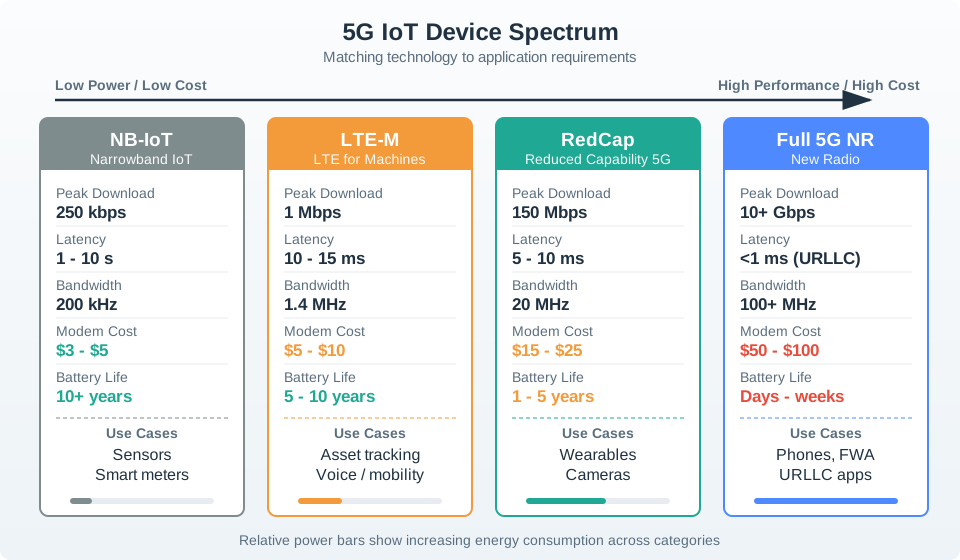
- Explain: Typical power class for IoT workloads gives the vertical comparison, while: NB-IoT anchors the low-power end against LTE-M, RedCap, and full 5G NR.
- Explain: The mathematical gist.: The chapter's 23 dBm omni sensor has 23 dBm EIRP.
Major section
Read Category Choice From Workload to Device modem
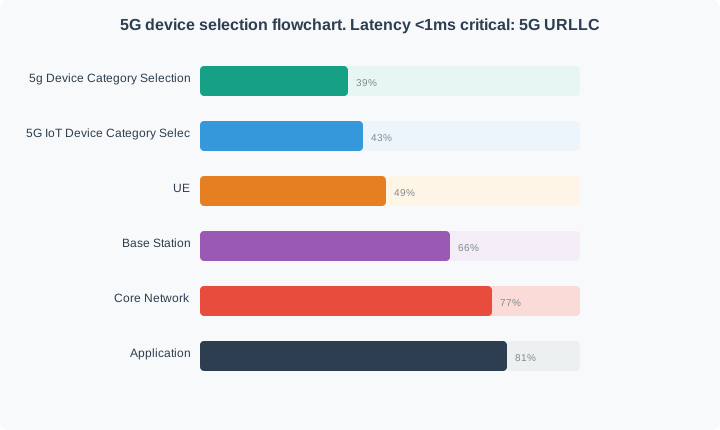
The labelled decisions ask what data rate, delay, mobility, coverage, power, and complexity the product needs.
- Its average application payload rate is (20\times8/60=2.67\ \mathrm{kbps}), though short upload bursts require more.
- A factory camera producing 4 Mbps video differs by roughly three orders of magnitude.
Major section
Read Category Choice From Workload to Device modem (continued)
Choosing one device modem category for both products can burden the wearable with cost and energy it cannot use, or leave the camera without required throughput.
- Peak rate is not the whole record.
- The wearable may require long battery life, compact antennas, indoor coverage, and mobility.
- Network availability is a release gate.
Major section
Begin With the Smallest Useful Radio
A payload is the useful data carried in a message.
- It sits in a hard place and must run for years.
- A large, fast modem may work, but that does not make it the right fit.
- More speed can help large or urgent work, but it may raise cost and power use.
Major section
Practitioner: Make a Device-Category Record
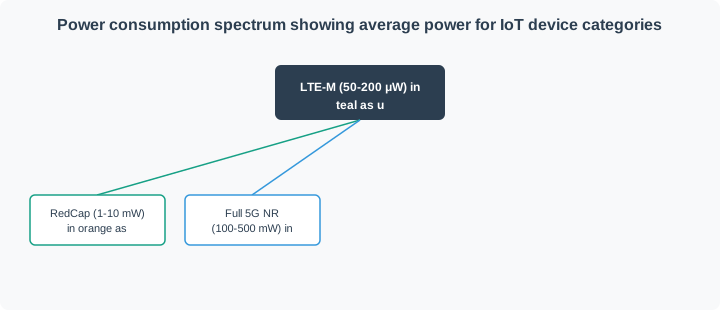
Typical power class for IoT workloads gives the vertical comparison, while: NB-IoT anchors the low-power end against LTE-M, RedCap, and full 5G NR.
- The increasing capability also brings higher radio and system demands, so the device-category record must preserve the traffic, latency, mobility, and battery constraints that justified its position.
Major section
Phoebe's Field Notes: Why a Directional Antenna Beats a Bigger Modem
The mathematical gist.: The chapter's 23 dBm omni sensor has 23 dBm EIRP.
- Its 20 dBm RedCap gateway plus an 8 dBi panel has 28 dBm EIRP: 5.00 dB, or 3.16×, more on-axis power density.
- The gain buys reach in one direction, not free power everywhere.
Major section
Summary
5G-era cellular IoT is a spectrum of device categories.
- NB-IoT and LTE-M remain strong choices for low-power wide-area devices.
- RedCap adds a mid-tier 5G NR option for richer IoT devices.
- Full 5G NR is reserved for high-throughput or engineered low-latency systems where the whole service path is validated.
Deck summary
Key takeaways
The labelled decisions ask what data rate, delay, mobility, coverage, power, and complexity the product needs.
- Choosing one device modem category for both products can burden the wearable with cost and energy it cannot use, or leave the camera without required throughput.
- A payload is the useful data carried in a message.
- Typical power class for IoT workloads gives the vertical comparison, while: NB-IoT anchors the low-power end against LTE-M, RedCap, and full 5G NR.
- The mathematical gist.: The chapter's 23 dBm omni sensor has 23 dBm EIRP.
Retrieval practice
Recall check 1 of 3

Radio Remi says: answer from memory, then check your reasoning.
Q1A utility meter sends compact readings a few times per day, is fixed in place, and must spend most of its life asleep. Which first-pass cellular category is the best fit?
Show answer
Answer: A The first-pass choice follows the service contract.
Retrieval practice
Recall check 2 of 3

Radio Remi says: answer from memory, then check your reasoning.
Q2A warehouse wants mains-powered inspection cameras that need moderate sustained uplink video, but not deterministic safety control. What should the category record do first?
Show answer
Answer: A A practitioner category record connects workload requirements to module and operator evidence.
Retrieval practice
Recall check 3 of 3

Radio Remi says: answer from memory, then check your reasoning.
Q3A proposal says a factory robot will be safe because it uses a 5G modem and a network slice. What is the correct review response?
Show answer
Answer: A Under-the-hood review separates category labels from service evidence.
Print reference
Answers
Answer key.
- A · The first-pass choice follows the service contract.
- A · A practitioner category record connects workload requirements to module and operator evidence.
- A · Under-the-hood review separates category labels from service evidence.