The PSM/eDRX Timer Ledger
The PSM/eDRX Timer Ledger
Ada audits the PSM/eDRX timer ledger — one time conversion, two measured-energy equations
 ADA · CALCULATION AUDIT
Foundations · optional mathematics and physics
The PSM/eDRX Timer Ledger
One time conversion, two measured-energy equations, ~4 minutes
A water meter that reports once a day spends almost all of its 86,400-second cycle asleep, waking only for a short post-uplink window to catch queued settings — and a maintenance campaign adds a temporary window where it listens more often before returning to that low-power policy. The chapter is deliberate that this is not a battery-life button: requested PSM and eDRX timers are only proposals until the network grant and a measured current trace confirm them. So this audit rebuilds the timer ledger to ask what it can honestly claim — the structure of the lifetime calculation, or the lifetime itself?
Companion to the chapter NB-IoT Power Saving (PSM/eDRX) — every number here comes from that chapter.
See the relationship before changing it
Set the input, apply the rule, then read the result with its unit.
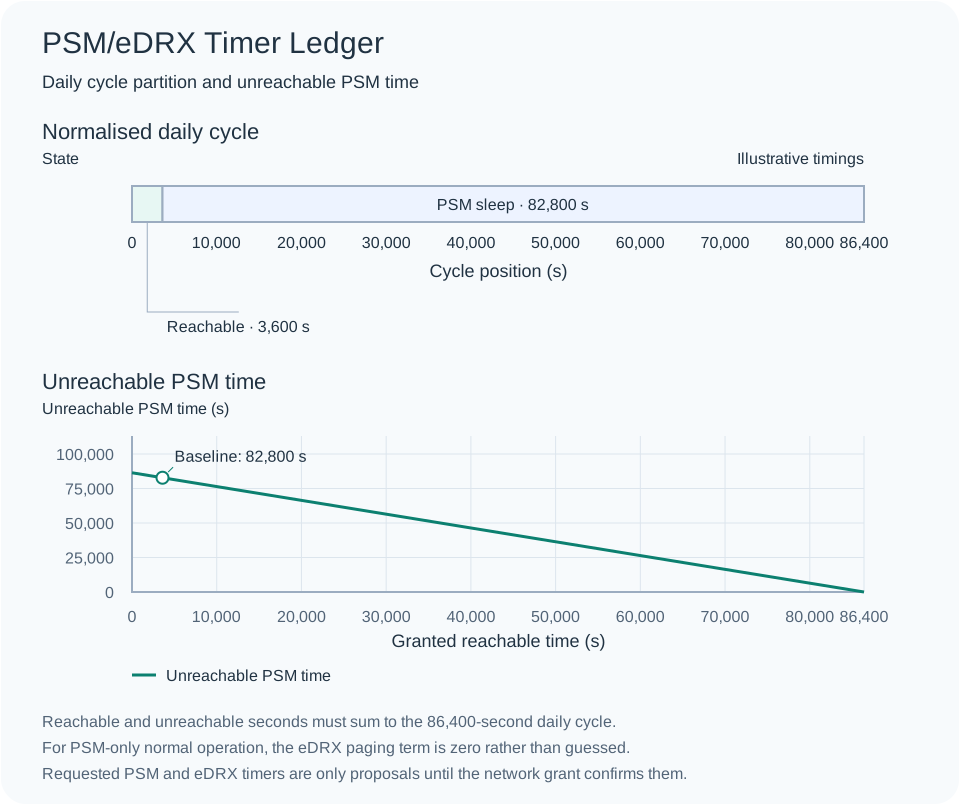
The retained audit below checks several chapter fixtures. This model keeps those stated values fixed and changes only granted reachable time, so the numeric fixture does not switch without explanation.
Derive the baseline in four named moves
- 1
Name the input. The chapter baseline is 3600 s/day.
- 2
Name the relationship. unreachable time = 86,400 s/day - reachable time
- 3
Substitute with units. 86,400 - 3,600 = 82,800 s/day
- 4
Read the result. Keep the unit beside the value. Use it only inside the technical boundary on this page.
Predict, then change granted reachable time
Try Predict the direction of unreachable time = 86,400 s/day - reachable time. Test another granted reachable time, then compare unreachable psm time.
Observe More network-granted reachable time leaves fewer seconds in unreachable power-saving mode. Reset granted reachable time to 3600 and compare unreachable psm time.
Explain The daily time budget is fixed, so every extra second the modem remains reachable removes one second from unreachable power-saving mode.
Check yourself
What should you do before trusting a moved-control result?
What does this small model leave out?
Ready: use the stated baseline inputs, then compare each displayed result.
Convert the daily cycle
The normal meter example reports once per day, so the cycle length is fixed before any modem grant is inserted.
For PSM-only normal operation, the eDRX paging term is zero rather than guessed.
Keep current as measured physics
Every current claim stays tied to a measured state and duration.
The monthly maintenance example changes the mode ledger; it does not license a battery-life claim without a return-to-PSM trace.
This audit proves the calculation structure only. Because the chapter has no measured current table, the release gate must still demand real trace values before claiming lifetime.
Every symbol above is taken from the chapter's own PSM/eDRX timer example and re-derived step by step.