Technical detail · IoT Architecture Anti-Patterns: Scenarios and Selection
Compare reference-model vocabularies
Finally, use Figure 4 to avoid mistaking one reference model’s vocabulary for the architecture itself. The comparison lets the reader align responsibilities across frameworks before evaluating operating trade-offs.
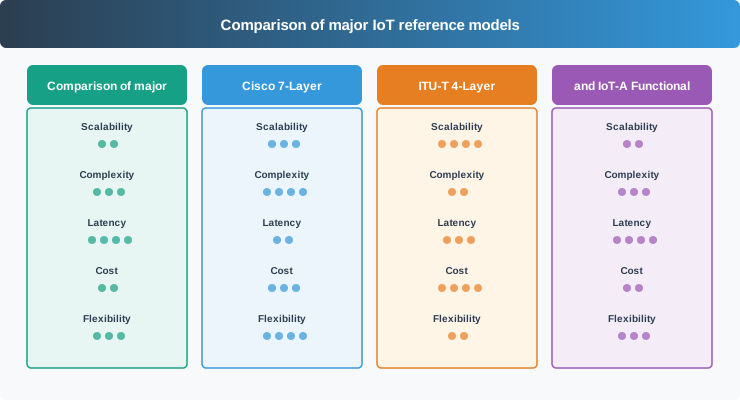
In Figure 4, compare the columns for the common layered model, Cisco 7-Level, ITU-T, and IoT-A. Read the cost row with the scope and complexity rows; a model with more layers is not automatically better. Each model groups jobs in its own way. For example, find where each describes storing a sensor reading and making it available to an app. Name the component that does the job and test that the app can retrieve the reading. This gives the team evidence for a comparison, even when the labels differ.