NB-IoT vs LTE-M Comparison
Interactive Visualization Comparing Cellular IoT Technologies
NB-IoT vs LTE-M: Choosing the Right Technology
This interactive animation demonstrates the key differences between NB-IoT and LTE-M, helping you choose the right cellular IoT technology for your application.
Compare the two dominant cellular IoT standards side-by-side:
- NB-IoT (Cat-NB1/NB2): Optimized for low data rate, deep coverage, stationary applications
- LTE-M (Cat-M1/M2): Optimized for mobility, voice, and higher data rate applications
Use the interactive tools to match your requirements to the best technology choice.
- Explore the radar chart comparing key metrics between technologies
- Select use cases to see which technology is recommended
- Use the Decision Wizard to get personalized recommendations
- Adjust sliders to see how requirements affect technology choice
- Compare deployment modes and coverage scenarios
Understanding NB-IoT vs LTE-M
The Cellular IoT Landscape
Both NB-IoT and LTE-M are 3GPP standardized cellular IoT technologies designed for the Internet of Things. They share the same goal - enabling low-power, wide-area connectivity - but take different approaches to achieve it.
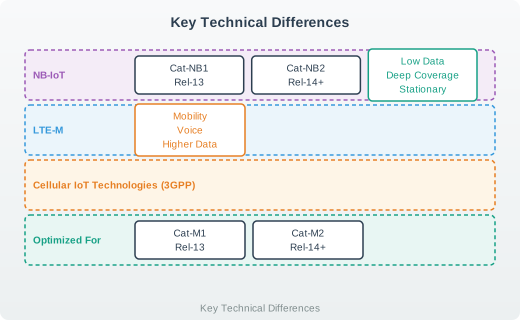
Key Technical Differences
| Feature | NB-IoT | LTE-M |
|---|---|---|
| Bandwidth | 180 kHz (single PRB) | 1.4 MHz (6 PRBs) |
| Peak Data Rate | ~250 kbps | ~1 Mbps |
| Latency | 1.5 - 10 seconds | 10 - 15 ms |
| Coverage (MCL) | 164 dB (+20 dB) | 156 dB (+15 dB) |
| Mobility | Limited (cell reselection only) | Full handover |
| Voice | Not supported | VoLTE supported |
| Duplex | Half-duplex | Full-duplex |
| Power Saving | PSM + eDRX | PSM + eDRX + C-DRX |
Coverage Comparison
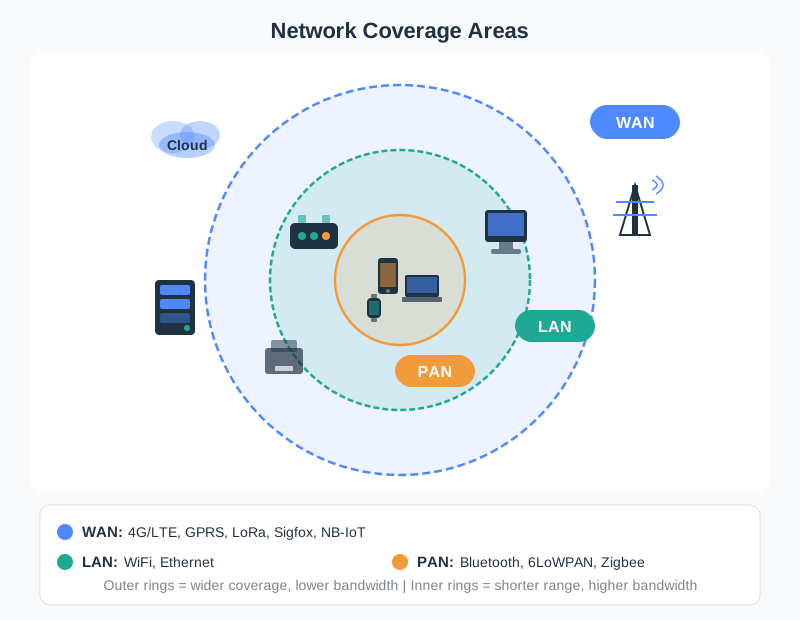
NB-IoT’s narrower bandwidth allows it to achieve better coverage in challenging environments:
Data Rate and Latency Trade-offs
Use Case Deep Dives
Smart Metering - NB-IoT
Smart metering is the flagship use case for NB-IoT:
- Data Requirements: < 100 bytes per reading, 1-4 times per day
- Location: Often in basements, meter closets, underground vaults
- Mobility: Completely stationary
- Battery: Must last 10-15 years on a single battery
- Latency: Minutes to hours acceptable for meter readings
Vodafone deployed 500,000+ NB-IoT smart water meters in Spain, achieving 10+ year battery life with twice-daily readings in challenging deep indoor locations.
Asset Tracking - LTE-M
Asset tracking requires the mobility that only LTE-M provides:
- Data Requirements: Location updates every few minutes to hours
- Location: Moving between cells frequently
- Mobility: Critical - assets cross cell boundaries
- Battery: 3-5 years acceptable with more frequent updates
- Latency: Near real-time tracking often required
When a tracked asset moves from one cell tower to another, LTE-M performs a seamless handover maintaining the connection. NB-IoT would need to re-attach to the network, causing delays and higher power consumption.
Healthcare Wearables - LTE-M
Medical wearables benefit from LTE-M’s unique capabilities:
- Voice: Emergency calls via VoLTE (fall detection, panic buttons)
- Data: Continuous health monitoring requires higher throughput
- Latency: Real-time alerts for critical health events
- Mobility: Patients move around, even between cities
Agricultural Sensors - NB-IoT
Remote agricultural deployments favor NB-IoT:
- Coverage: Rural areas often have weak cellular signals
- Data: Soil moisture, weather data sent every few hours
- Power: Solar + battery must last entire growing season
- Stationary: Sensors stay in fixed field locations
Power Consumption Comparison
Both technologies support PSM (Power Saving Mode) and eDRX (Extended DRX), but their active power consumption differs:
| State | NB-IoT | LTE-M |
|---|---|---|
| Deep Sleep (PSM) | ~3 uA | ~3 uA |
| eDRX Sleep | ~3 uA | ~3 uA |
| Paging/RX | ~50 mA | ~80 mA |
| Active TX | ~220 mA | ~350 mA |
For a device sending 100 bytes once per day:
NB-IoT: ~0.2 mAh/day = 27+ years on 2000mAh battery
LTE-M: ~0.5 mAh/day = 10+ years on 2000mAh battery
NB-IoT’s lower active current and simpler protocol stack result in lower energy per transaction.
3GPP Evolution
Both technologies continue to evolve through 3GPP releases:
Deployment Considerations
This decision tree provides a systematic approach to selecting between NB-IoT and LTE-M based on application requirements. Start at the top and follow the path matching your needs.
Network Availability
- NB-IoT: Available in 70+ countries (strong in Europe, China)
- LTE-M: Available in 50+ countries (strong in North America)
Some operators deploy both, others choose one based on market needs.
Module Cost
As of 2024: - NB-IoT modules: $3-8 USD (lower complexity) - LTE-M modules: $8-15 USD (full modem capability)
Coexistence
Many modern cellular IoT modules support both NB-IoT and LTE-M, allowing devices to: - Use LTE-M when available (faster, lower latency) - Fall back to NB-IoT in areas with weak coverage - Switch based on application requirements
What’s Next
- NB-IoT Labs - Hands-on with NB-IoT
- Cellular IoT Implementations - Practical deployment
- Energy-Aware Design - Optimize for battery life
This animation demonstrates the key differences between NB-IoT and LTE-M using:
- Radar Chart: Multi-axis comparison of 6 key metrics
- Use Case Selector: Interactive recommendation engine
- Decision Wizard: Slider-based requirements matching
- Technical Specs: Side-by-side detailed comparison
The animation uses the IEEE Color Palette: - Teal (#16A085): NB-IoT elements - Orange (#E67E22): LTE-M elements - Navy (#2C3E50): Neutral/header elements
Built with D3.js, self-contained with no external dependencies beyond Quarto’s included libraries.